Worshiping in the Ge’ez rite
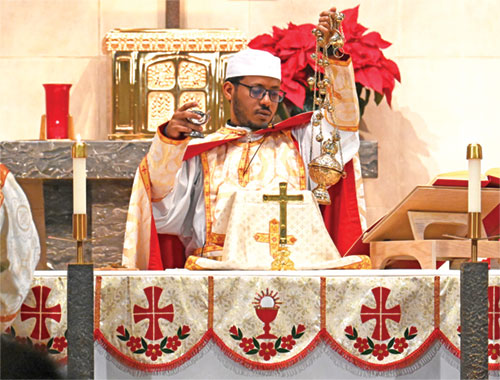
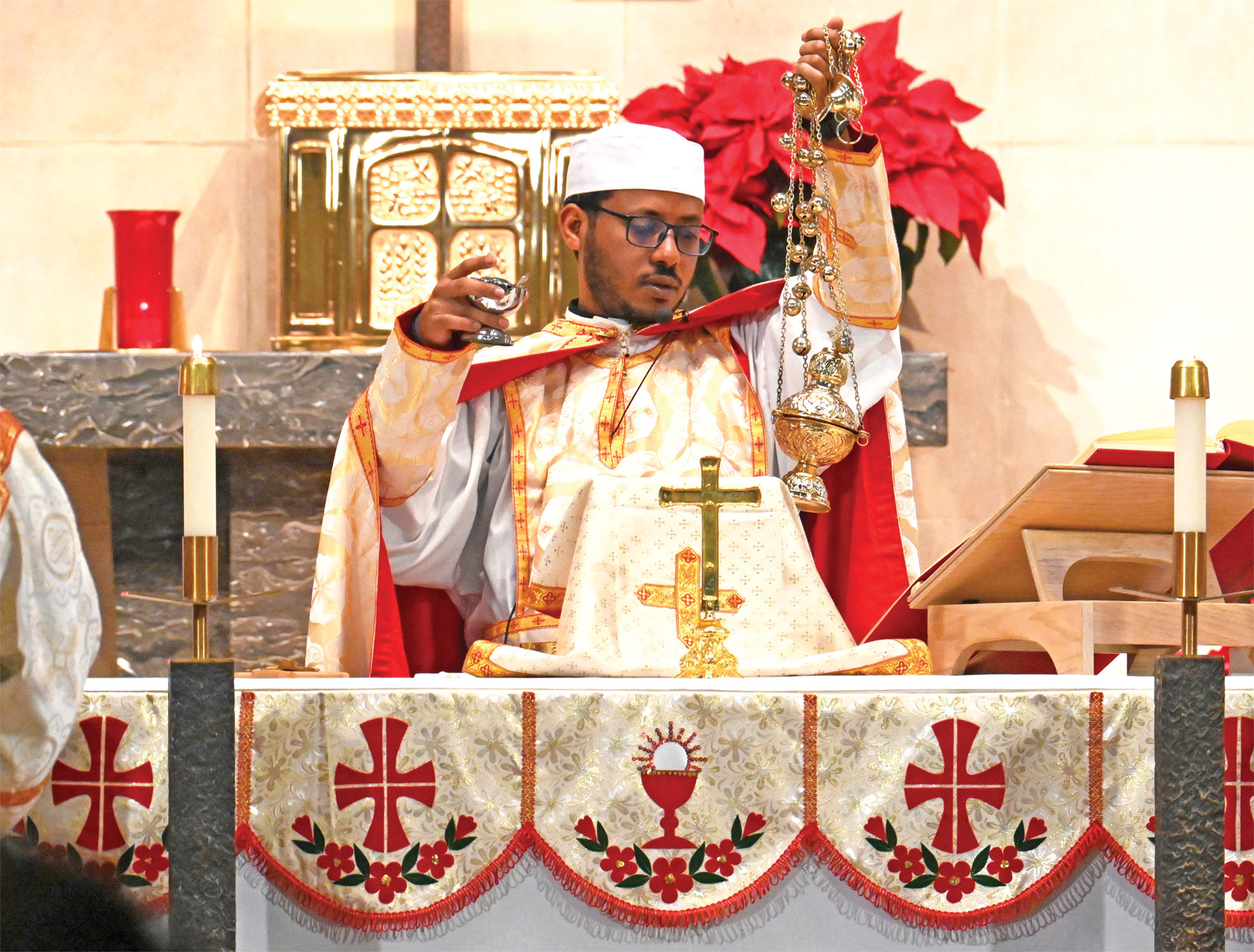
Vincentian Father Haile Suba, a priest from Eritrea temporarily studying in New York, incenses the altar in St. Michael the Archangel Church in Indianapolis on Jan. 10 during a Mass in the Ge’ez rite celebrating Christmas for the Eritreans and Ethiopians who are members of the westside parish. (Photo by Natalie Hoefer)
There are numerous differences between the Latin-rite Mass of the West and the Ge’ez rite (also known as the Ethiopian or Abyssinian rite) Divine Liturgy used in the Ethiopian and Eritrean Churches.
Below is an excerpt from “Roots run deep for Ge’ez rite Catholics in Ethiopia” by Thomas Landy. To read the entire article, go to tinyurl.com/GeezRite.
“The Ethiopian Rite involves considerable movement by the clergy around the altar, as well as standing and kneeling, singing. …
“During worship, women generally sit separately from men, but families may sit together. …
“The Catholic liturgical year is organized around the traditional calendar of the Ethiopian Church, which derives from the ancient Coptic calendar and the Roman Julian [pre-Gregorian] calendar. The Ethiopian liturgical calendar includes several feasts, including nine major feasts of Christ and 33 dedicated to the Virgin Mary. …
“The Divine Liturgy is divided into two parts: the introductory portion and the anaphora [Eucharistic prayer]. Traditionally, leavened bread is used to celebrate Mass. Normally, five [roles] are required: two priests, a deacon, a subdeacon, and a lector. …
“The Divine Liturgy begins with a profound veneration by the priest and prayers at the foot of the altar. Immediately afterward, there is a first offertory in which the priest wraps the host in the small veil and raises it toward the cross.
“Before reading the Gospel, the priest recites preparatory prayers, during which he gives his blessing to the entire world, since the Gospel is to be preached to everyone. At the end, he kisses the book and touches it with his forehead, as a sign of gratitude and veneration. …
“After consecrating and adoring the Precious Body, the priest bows toward the chalice to pronounce sacred words. Then, he inclines the chalice four times in succession, toward the four cardinal points, to signify the blood shed for the entire world. …
“The Sacred Host is elevated twice in succession. In the first Elevation, there is the injunction: ‘The Holy One is for the saints,’ reminding the faithful of the state of grace required to receive Communion. In the second, the invocation, ‘Christ, have mercy on us,’ is repeated 41 times … .” †
Related story: ‘At home’ in Indy parish, Eritreans and Ethiopians also find joy in native Ge’ez rite