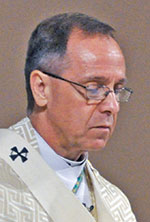
Statement of the Most Reverend Charles C. Thompson, Archbishop of Indianapolis, on Pope Leo XIV Addressing the Signs of Our Times
 The Catechism of the Catholic Church provides a great deal for us to consider concerning the outbreak of wars within and among nations. Drawing from various Church documents and resources, especially Gaudium et Spes, the Second Vatican Council’s “Pastoral Constitution of the Church in the Modern World,” published on December 7, 1965, the Catechism notes that peace is “more than the mere absence of war.” It also points out the need for addressing the root causes of war, violence, and other disruptions to the social order of humanity including:
- Injustice
- Excessive economic or social inequalities
- Envy, distrust, and pride raging among men and nations, constantly threatening peace and causing wars.
Everything done to overcome these disorders contributes to building up peace and avoiding war [CCC, #2317].
Overcoming these disorders involves addressing various types of egos, personalities, and ideologies that contribute to the ever-deepening polarization of practically every facet of human relationships.
Rooted in the Sacred Scriptures and long-standing Catholic Teaching, Pope Leo XIV has been persistent about the need for authentic reflection, dialogue, discernment, and action to address the signs of our times, particularly with regard to morality and ethics of aggressive behavior towards others. While it is the poor, vulnerable, and innocent who suffer the most from war, few if any members of society really win.
Properly understood, religion can serve as the conscience of society. At the same time, awakening, prodding, or stirring the conscience can sometimes prompt unfriendly reactions. Our Holy Father Pope Leo has clearly stated that his responsibility as Shepherd of Souls is to proclaim the Gospel rather than pose as any type of politician. Still, his statements and actions can seem to threaten those who look to justify acts of violence, unjust war, and indiscriminate behavior from less than reputable agendas. Upon arriving in Algiers, Algeria, for his recent papal trip to Africa, Pope Leo commented: “God desires peace for every nation: a peace that is not merely an absence of conflict, but one that is an expression of justice and dignity.”
In his statement of April 13, 2026, Archbishop Paul Coakley of Oklahoma City, President of the United States Conference of Catholic Bishops, reacted to negative comments made by U.S. President Donald J. Trump about Pope Leo XIV: “I am disheartened that the President chose to write such disparaging words about the Holy Father.” Archbishop Coakley said. “Pope Leo is not his rival; nor is the pope a politician. He is the Vicar of Christ who speaks from the truth of the Gospel and for the care of souls.”
Cardinal Joseph Tobin of Newark, my predecessor of very fond memory here in the Archdiocese of Indianapolis, provided the following statement:
In response to recent events, I reaffirm that Pope Leo serves a higher authority and desires to proclaim the Gospel faithfully and advances the Church’s peaceful mission in a world deeply in need of healing. He will continue to speak clearly against war and other offenses against human dignity and to call for authentic dialogue, because the Church’s witness is grounded in the peace of Christ, not in partisan interests. [Archdiocese of Newark, April 13, 2026]
Cardinal Tobin went on to stress that the U.S. President’s criticisms “convey a grave misunderstanding of the Holy Father’s ministry and a troubling lack of respect for the faith of millions.”
As is clearly reflected in Gaudium et Spes, the Church Fathers of the Second Vatican Council were greatly concerned about the escalation of wars within and among nations. Recognizing the danger of self-interest and the various issues outlined in the Catechism, they called for the establishment of international organizations to promote peace, dialogue, authentic justice, rightful determination of force as well as defense, resolution, and reconciliation. Along with a properly formed conscience and informed understanding, we all need checks and balances to help maintain a social order based on authentic truth, beauty, and goodness. At times, we need to be reminded that the exercise of individual freedom must never come at the expense of the common good.
The Catholic Church has been blessed with some wonderful popes throughout the course of its long history, including the popes who served during my lifetime. It is our Catholic belief that the Holy Spirit guides the election of a pope. I firmly believe this to be true for the election of Pope Leo XIV. While few saw it coming— hardly daring to think that someone born in the United States could be elected as the Supreme Pontiff—the Cardinals certainly knew what they were doing. At least, they allowed the Holy Spirit to make them look really good! Pope Leo has not disappointed. Though humble and unassuming, he is a man of deep spirituality, great intellect, measured decisions, keen insight, undaunted courage, and profound discernment. He is the right person to address the signs of our times.
Like Saint John the Baptist, Pope Leo is clear about who he is and who he is not. As he says, his task is to proclaim to all the Gospel message that the Church has been given by Jesus Christ. Refusing to bend to any worldly ego, personality, ideology, or regime, the Holy Father remains Christ-centered.
Please join me in holding Pope Leo XIV in prayer, esteem, solidarity, and respect.
+Charles C. Thompson
Archbishop of Indianapolis