That All May Be One / Fr. Rick Ginther
Interreligious, ecumenical relationships are integral part of Church’s mission
 It’s May. The Kentucky Derby, the Preakness and the Indianapolis 500. What else could there be?
Well, Pope Leo XIV’s focus has been somewhere else. He continued where he began last May. He championed the role of religions to clearly speak and live in peace, to attend to human needs and to dialogue.
In his homily of May 18, 2025—soon after his election—the pope spoke these words:
“Let’s tell the world, with humility and joy … to listen to God’s offer of love and become his one family. This is the path to follow together, among ourselves but also with our sister Christian churches, with those who follow other religious paths, with those who are searching for God, with all women and men of good will, in order to build a new world where peace reigns.”
On May 11, he spoke to an interfaith colloquium in Rome.
His remarks were to members of Jordan’s Royal Institute for Inter-Faith Studies and of the Holy See’s Dicastery for Interreligious Dialogue.
He noted that “the Muslim tradition associates compassion, ra’fa, with mercy as a gift bestowed by God in the hearts of believers… [O]ne of the divine names, al-Ra’uf, reminds us that compassion always has its origin in God himself.
“For our traditions, human compassion and empathy are not something additional or optional, but are a call from God to reflect his goodness in our daily lives.
“Christians and Muslims, drawing from the richness of our respective traditions, are called to a common mission: to revive humanity where it has grown cold, to give voice to those who suffer and to transform indifference into solidarity.
“Compassion and empathy can be our instruments as they have the power to restore the dignity of the other.”
A message to all Buddhists celebrating their holiday of Vesak on May 31 followed. The message finds roots in Pope Leo’s words.
Vesak commemorates the birth, enlightenment, and passing into final Nirvana of Siddhartha Gautama, the Buddha.
The message was written by the Vatican’s Dicastery for Interreligious Dialogue. It invites Buddhists and Christians to work together for an “unarmed and disarming peace” rooted in compassion, dialogue and inner transformation.
Peace, it says, “is not simply a political aspiration or the absence of armed conflict, but something that begins in the human heart.”
The text warns that humanity risks falling into “a dangerous cycle of suspicion and hostility.”
“[G]oodness is truly disarming. … It can break ‘the cycle of suspicion.’ It can open ‘paths where none seemed possible.’ ”
The state of our world needs our common beliefs to be spoken clearly and often. The text says that religious leaders should become “authentic partners in dialogue and true agents of reconciliation,” and believers are urged to become “artisans of peace.”
Communities must not, as we have seen in recent history, become complicit through fear, silence or indifference.
Religious communities should become a place “where hostility is overcome through encounter, where justice is practiced, and where forgiveness is cherished.”
If these examples of interreligious and ecumenical common mission stir your interest, I invite you to visit the website of Vatican News (vaticannews.va/en.html).
It is a consistent source and reminder that our interreligious and ecumenical relationships are an integral part of the Church’s mission to the world.
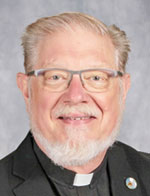
(Father Rick Ginther is director of the archdiocesan Office of Ecumenism and Interreligious Affairs. He is retired from full-time pastoral ministry, but is still active as a priest of the archdiocese.) †