That All May Be One / Fr. Rick Ginther
Learning about other religions without allowing prejudices to interfere
 “I confess to almighty God, and to you, my brothers and sisters … what I have done and what I have failed to do … .” (from the Penitential Act of Mass)
We move through this prayer and then on to other liturgy moments (the Gloria, the Collect). We are given little time to mentally name specific actions or failures to act.
Let’s consider one action seldom named at this moment, let alone in daily life: religious prejudice evidenced by our words, attitudes and false conclusions.
These three have a generic behavioral cousin: gossiping, that is, bearing false witness in some instances, or the sin of detraction in others. These sins are often named during the sacrament of reconciliation.
But what we say, think or harbor about another religion or religious group reveals our deep, often hidden or masked, sinful attitudes.
For example, Jews, Judaism and antisemitism. They are not the same thing, but they are clearly related.
The U.S. Conference of Catholic Bishops’ Committee on Ecumenical and Interreligious Affairs, in conjunction with the American Jewish Committee, published in December 2024 “Translate Hate: Stopping Antisemitism Starts with Understanding it.”
The work contains a glossary of 61 terms which have antisemitic roots. The glossary reveals that these have roots in and reveal antisemitic attitudes.
This document can be found through a simple online search: Translate Hate, Catholic Edition.
Christians often show their lack of understanding concerning Mormons, or the Church of Jesus Christ of Latter-Day Saints (LDS).
They are labelled “polygamists,” even though polygamy was doctrinally rejected in the latter 19th century. While the LDS rejected the practice, there continue to be splinter Mormon groups that accept and live out the practice.
“Magic underwear” is a derogatory term for the temple garment worn by adult members of The Church of Jesus Christ of Latter-day Saints. They wear them as a reminder of sacred covenants they made in a temple.
And finally, the interior of LDS temples, considered “holy” upon dedication, are closed to non-believers. This appears to many as inhospitable, even exclusionary, secretive. But by LDS understanding, access is limited to “temple recommend” members.
Some Christians also harbor a number of prejudicial misconceptions about Muslims.
For example, some believe Muslims wish to conquer the world and impose sharia law through jihad.
“Jihad” is an Arabic word for “striving” or “exertion.”
Greater jihad is the taming of oneself: words, attitudes, lower urgings, striving for greater faith and practice of Islam.
Lesser jihad is the struggle to defend Islam and the community from aggression and oppression. Sadly, the “lesser” has been co-opted by extremists, a scandal to most Muslims.
Then, there is the misconception that all Arabs are Muslims, forgetting that some Arabs are Christians and other smaller groups, such as the Yazidi and Druze. Or the misconception that all Muslims are Middle Eastern—when the majority are actually in Indonesia and sub-Saharan Africa.
Catholics can have short memories of the religious and ethnic prejudices we have borne over the centuries. We were, and still are, called fish eaters, mackerel snappers, Bible haters, statue worshippers, papists.
History has witnessed many Catholic immigrants to the U.S. suffering religious and ethnic prejudice—Irish, Italians, Eastern Europeans, Vietnamese refugees, Haitians, Latinos.
And don’t forget the struggle in 1960 when a Catholic sought the highest office of our land. It was an uphill battle, but John F. Kennedy was elected to lead our country.
“… in what I have done, and in what I have failed to do … .”
Perhaps this reflection will lead us to admit how our religious prejudices exist, are hidden, and are sinful. Perhaps our failing to do the task of learning about the other may now be undertaken.
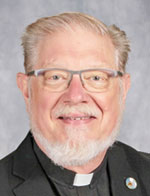
(Father Rick Ginther is director of the archdiocesan Office of Ecumenism and Interreligious Affairs. He is retired from full-time pastoral ministry, but is still active as a priest of the archdiocese.) †